

'The New Museum of Wonder:
The Gene of Curiosity'
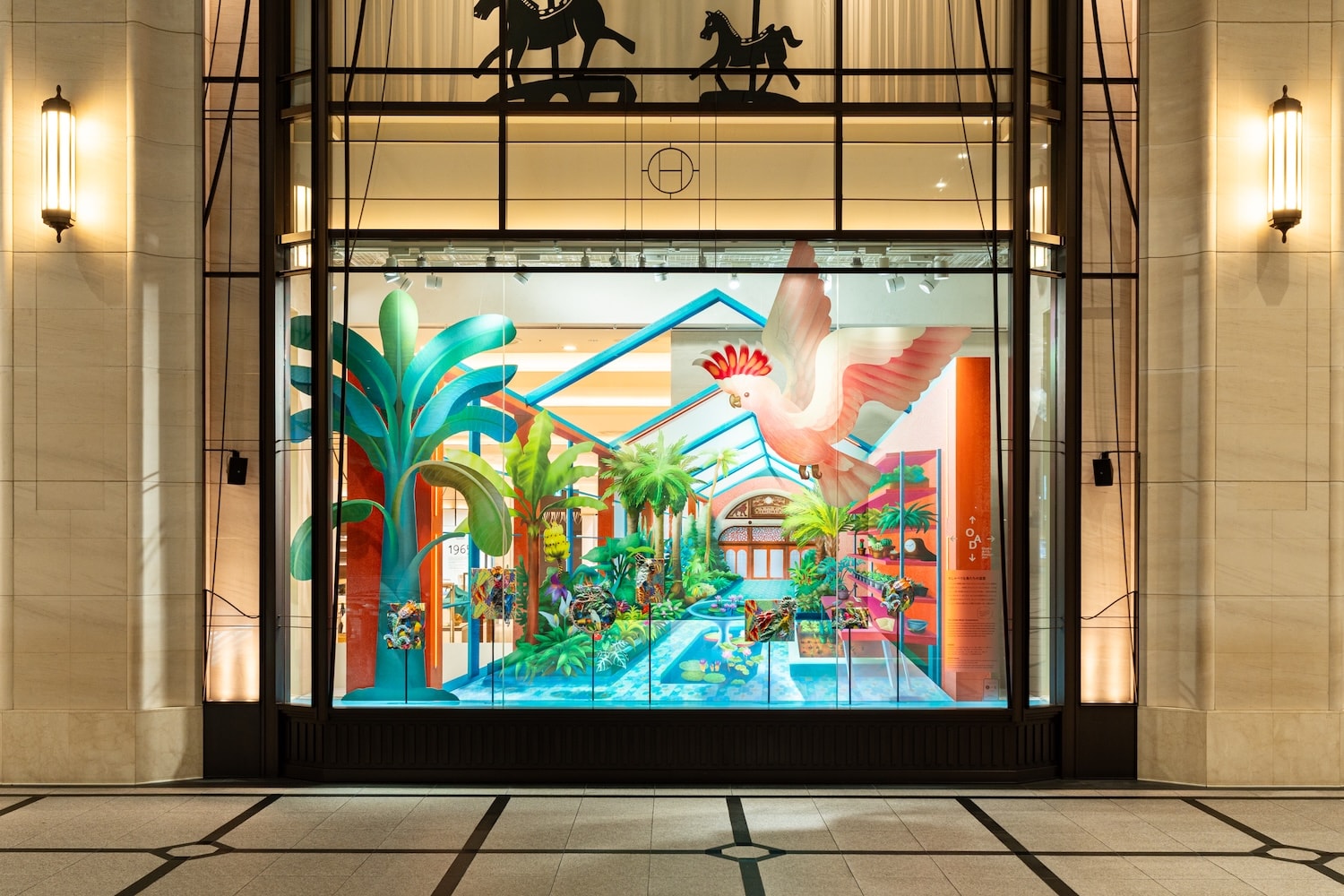
'The New Museum of Wonder:
The Gene of Curiosity'
May 8th – June 23rd, 2025
Hankyu Department Store Umeda Main Store Concourse Window, Concourse 1F Osaka Umeda Twin Towers North
Osaka
Artists: MIYATA Sayaka / HIROTA Midori
Clients: Hankyu Hanshin Department Stores,Inc., Hankyu Hanshin Properties Corp.
Concept & Direction: Code-a-Machine (KANAZAWA Kodama + MASUI Shinichiro)
Texts: KANAZAWA Kodama
Assistance with Window Background Painting: Sawano ENAMI
Photo: MATSUMI Takuya
- Art Consulting
- Curation/Planning
- Writing
A Theme Exhibition Timed with the Expo, Presented in Japan’s Premier Show Window and Concourse
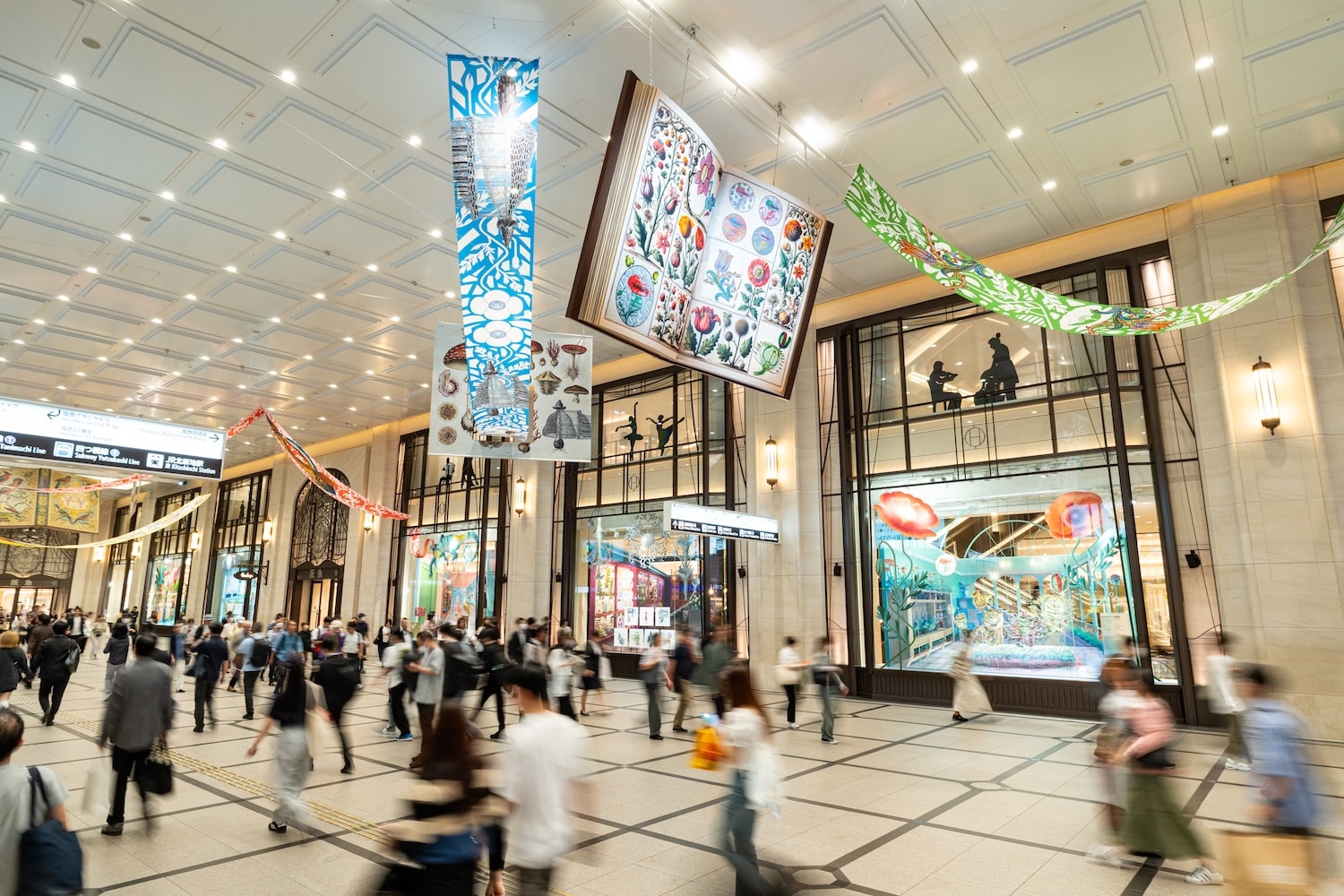
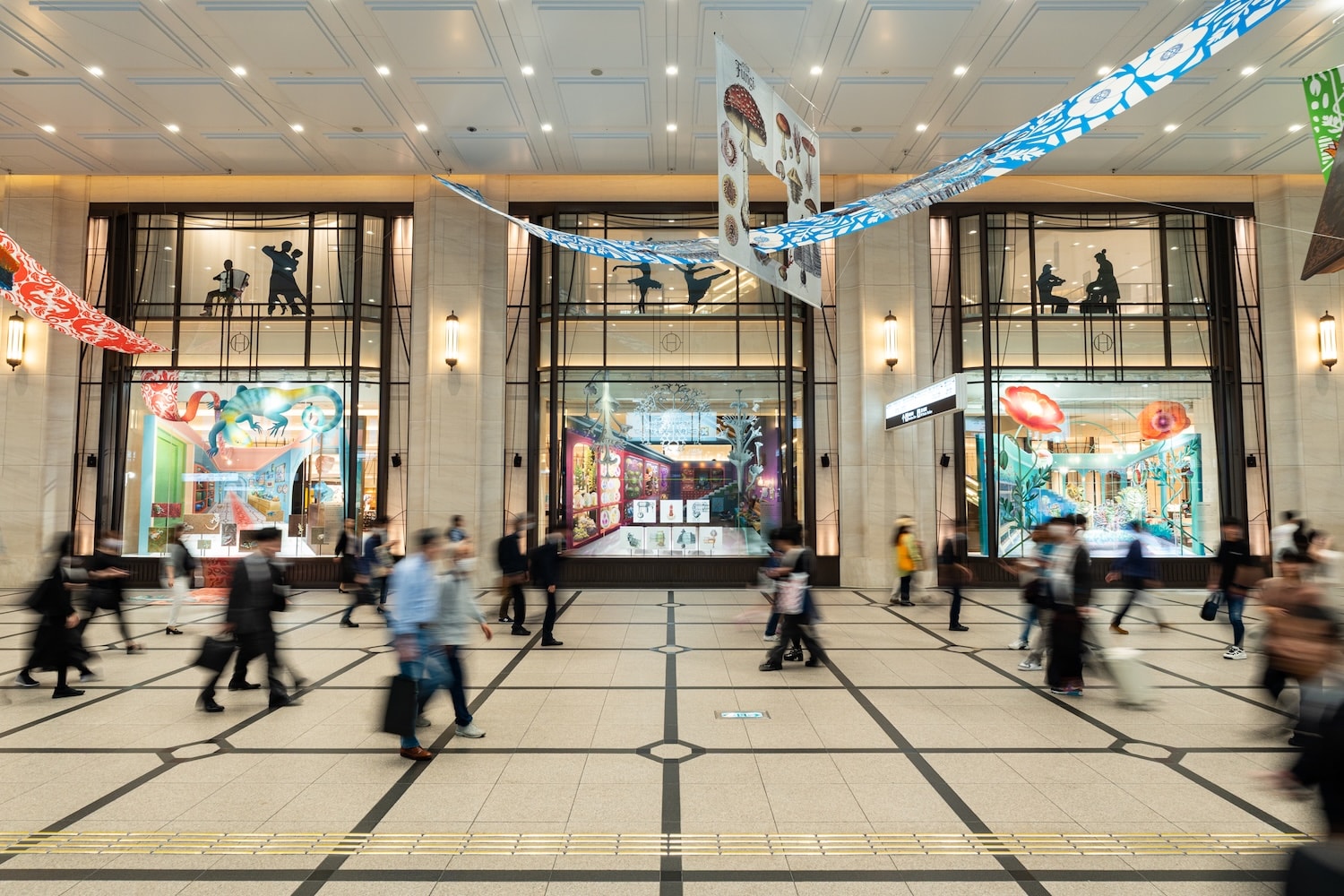
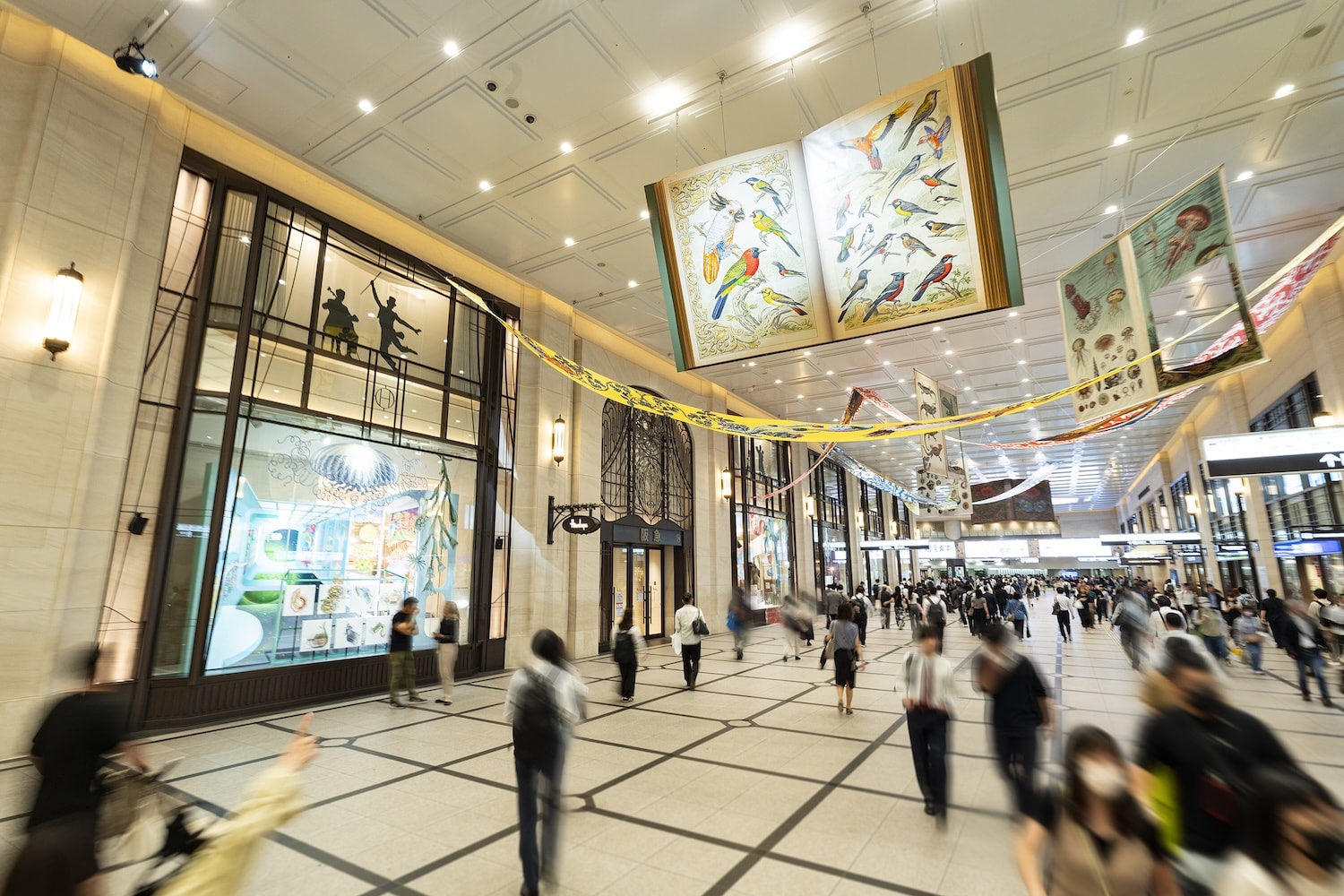
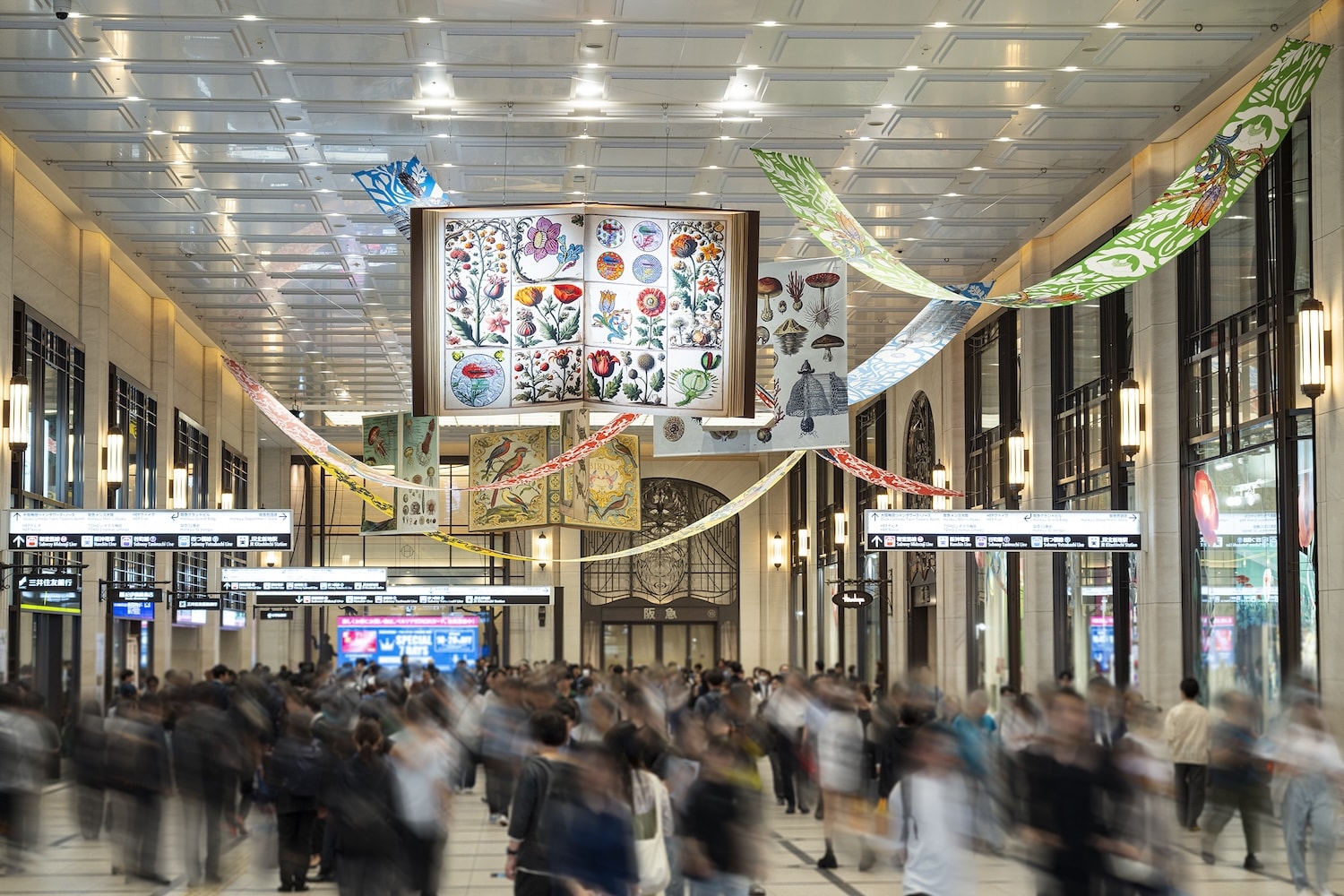
In a location that sees 300,000 passersby each day, two separate display spaces, the Hankyu Concourse Window and the Concourse 1F Osaka Umeda Twin Towers North, came together for the first time under a single theme. Timed to coincide with Expo 2025 held in Osaka, Code-a-Machine planned and directed a large-scale installation exploring the history of human curiosity and its drive to collect and observe, as reflected in cabinets of curiosity, museums, and World Expos. Beginning with the flora and fauna depicted in the embroidery works of artist Miyata Sayaka, and in collaboration with sign maker and designer Hirota Midori for design and illustration, the project brought to life a giant illustrated book and collection-room sets using trompe-l’œil in the heart of Umeda, Osaka.
Read More
The New Museum of Wonder: The Gene of Curiosity, conceptualized and directed by Code-a-Machine, is an installation that explores a world driven by our intellectual curiosity toward the “unknown.” The installation is inspired by the work of contemporary artist Miyata Sayaka, and features spatial design and illustrations by sign maker and designer Hirota Midori.
Humanity has always been fascinated by the rare and the new. From the 15th to 18th centuries, European royalty and aristocrats collected curious objects in so-called “cabinets of curiosities” and marveled at their contents. In the 19th century, World Expos began to emerge. The 1878 Paris Exposition attracted over 16 million visitors who came to see the cutting-edge inventions of the time, such as the sewing machine and phonograph. The artworks, specimens and technologies displayed in these cabinets of curiosities and World Expos laid the foundation for scientific and artistic inquiry—an influence that continues to echo in today’s museums.
With The New Museum of Wonder: The Gene of Curiosity, the department store windows are transformed into vibrant spaces teeming with plants and animals, while giant illustrated books float above the concourse. Miyata Sayaka’s embroidery works draw on imagery inspired by the natural history illustrations of German biologist Ernst Haeckel, as well as depictions of flora and fauna from textiles across cultures and eras. By skillfully embracing the mechanical errors of the sewing machine, Miyata introduces accidental forms that suggest previously unimagined possibilities hidden within nature.
Hirota Midori integrates a diverse range of items, including Miyata’s works, into a unified worldview. The sets used as the backdrops for the windows create an optical illusion of depth. Through this effect, Hirota bridges the gap between the painted and the real, encouraging viewers to imagine a world beyond what meets the eye.
Cutting-edge technologies hinting at the future were also incorporated into the creation process. The illustrated books floating above the concourse feature reimagined images of “natural history books from centuries ago,” created by AI. The behavior of the AI, generating new images based on accumulated knowledge, reminds us of our own journey— inheriting the past while moving toward an unseen future.
This installation, embodying the longing and curiosity for the “unknown” across the past, present, and future, quietly yet powerfully invokes humanity’s boundless imagination and spirit of inquiry.

MIYATA Sayaka (Contemporary Artist)
Born in Kyoto, Miyata completed her Master’s Course in the dyeing field at the Graduate School of Art, Kyoto University of Art and Design (currently, Kyoto University of the Arts) in 2012.
Her specialization in dyeing at the graduate school led her to start creating works with her original technique of using hand and machine embroidery to increase the depth and volume of dyed cloth.
Her works include the WARP series, featuring layers of thread created by intentionally causing glitches in a sewing machine, a very common medium, and the Knots series, which is made entirely of thread with no fabric backing attached. Her works are coordination between her proprietary techniques based on the idea that errors create new values and the forms of organisms or the way phenomena happen and develop. This approach sharply distinguishes her from other contemporary artists.Major exhibitions where she has presented her works include the 2024 Sapporo International Art Festival at Hokkaido Museum of Modern Art (2024) and the solo exhibition Urahara no ito wa yosuga at Gifu Collection of Modern Arts, Gifu (2022).
HIROTA Midori (Sign Painter / Graphic Designer)
After working as a graphic designer at a design office, Hirota took over Kantaro, her family’s sign-making business, as its second owner in 2015. While designing logos and visual identities for stores, brands, events, exhibitions, and the like, she also attempts to use signs as a foundation for deploying two-dimensional designs, such as hand-drawn lettering, drawings, and graphics, in spaces using a variety of materials and media. Under this initiative, she carries out all the steps of design, production, and installation on her own. As an original project to pursue the potential of signs as a medium, she held Signs and Beyond at Mimiyama Mishin, Osaka (2017) and at Muracekai, Tokyo (2020). She also aims to promote sign-painting techniques, which are currently on the decline.


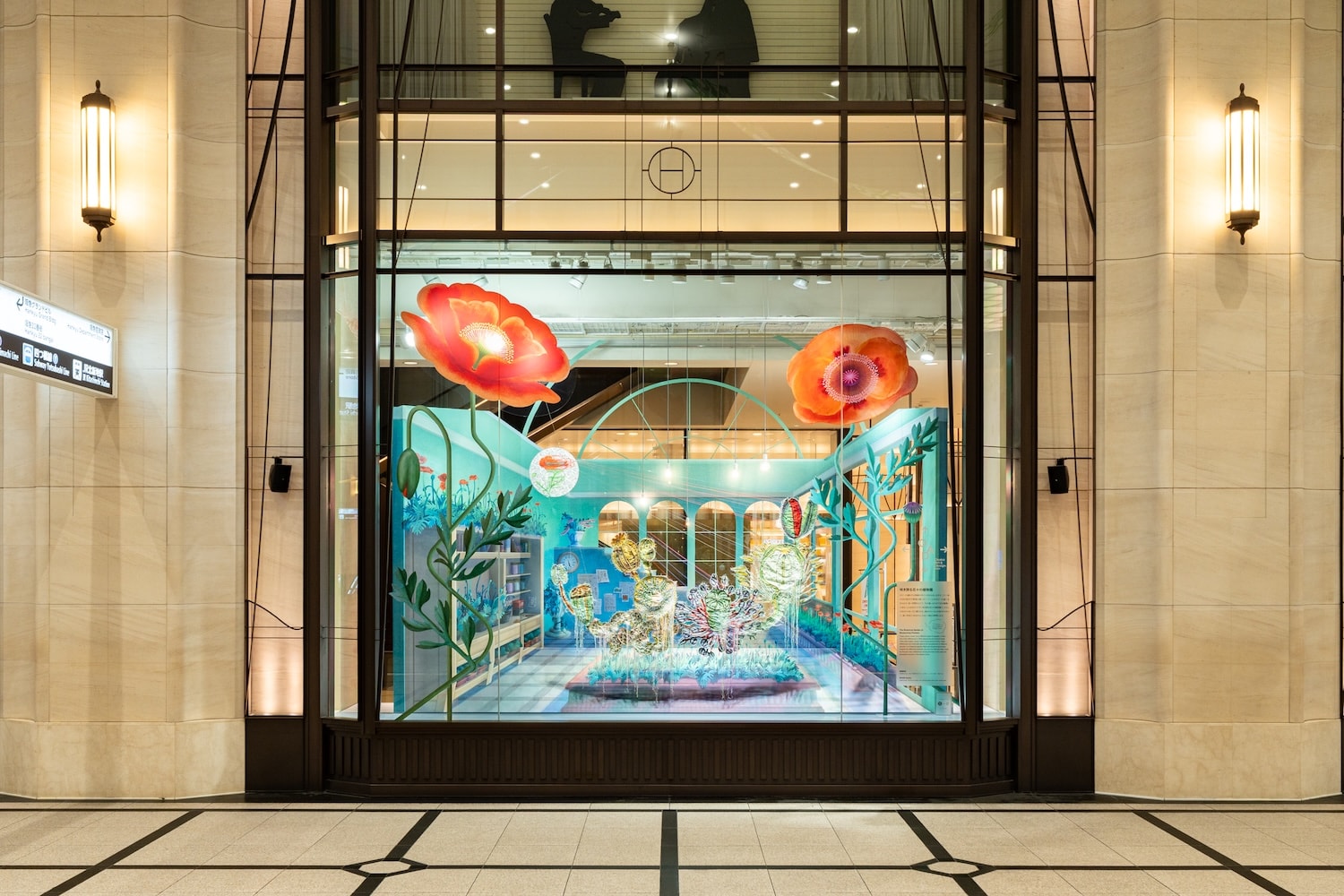
The Botanical Garden of Blossoming Flowers
The genes of poppies give rise to countless flowers, yet subtle differences in DNA sequences or environmental conditions make each one unique. Over long spans of time, these differences can eventually diverge into entirely new species. In a botanical garden in full bloom, we imagine the countless lives of the past that lie between you and me—and the (perhaps possible) evolution that awaits in the distant future.


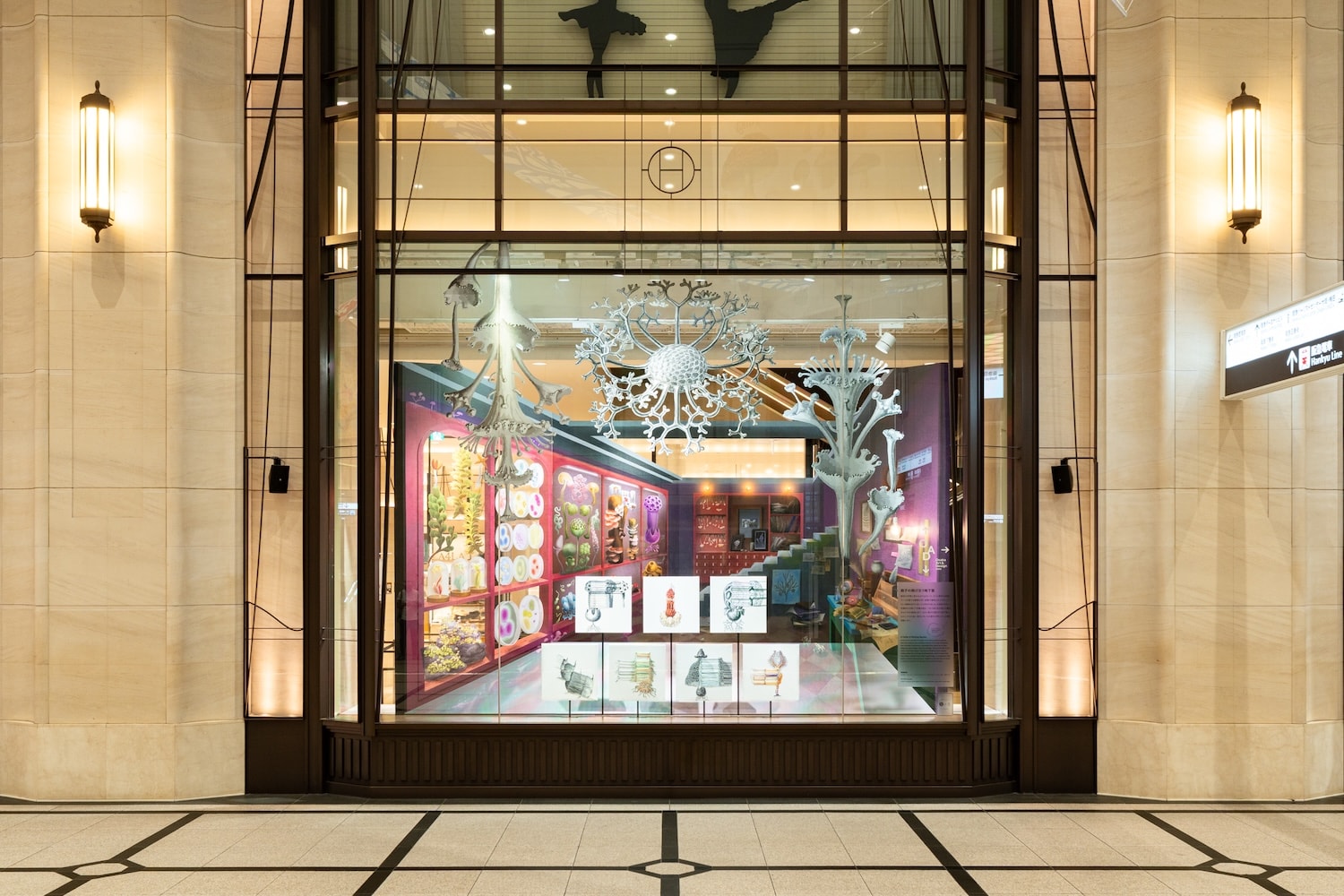
A Cellar of Soaring Spores
Mushrooms are often mistaken for plants, but genomic analysis has revealed that fungi, to which mushrooms belong, diverged from plants at an early stage—and are, in fact, more closely related to animals. Like animals, they don’t photosynthesize; instead, they obtain nutrients by breaking down organic matter, drawing sustenance from other living things. In a spore-filled underground room, we imagine a time when the ancestors of mushrooms and the ancestors of humans were still one and the same.


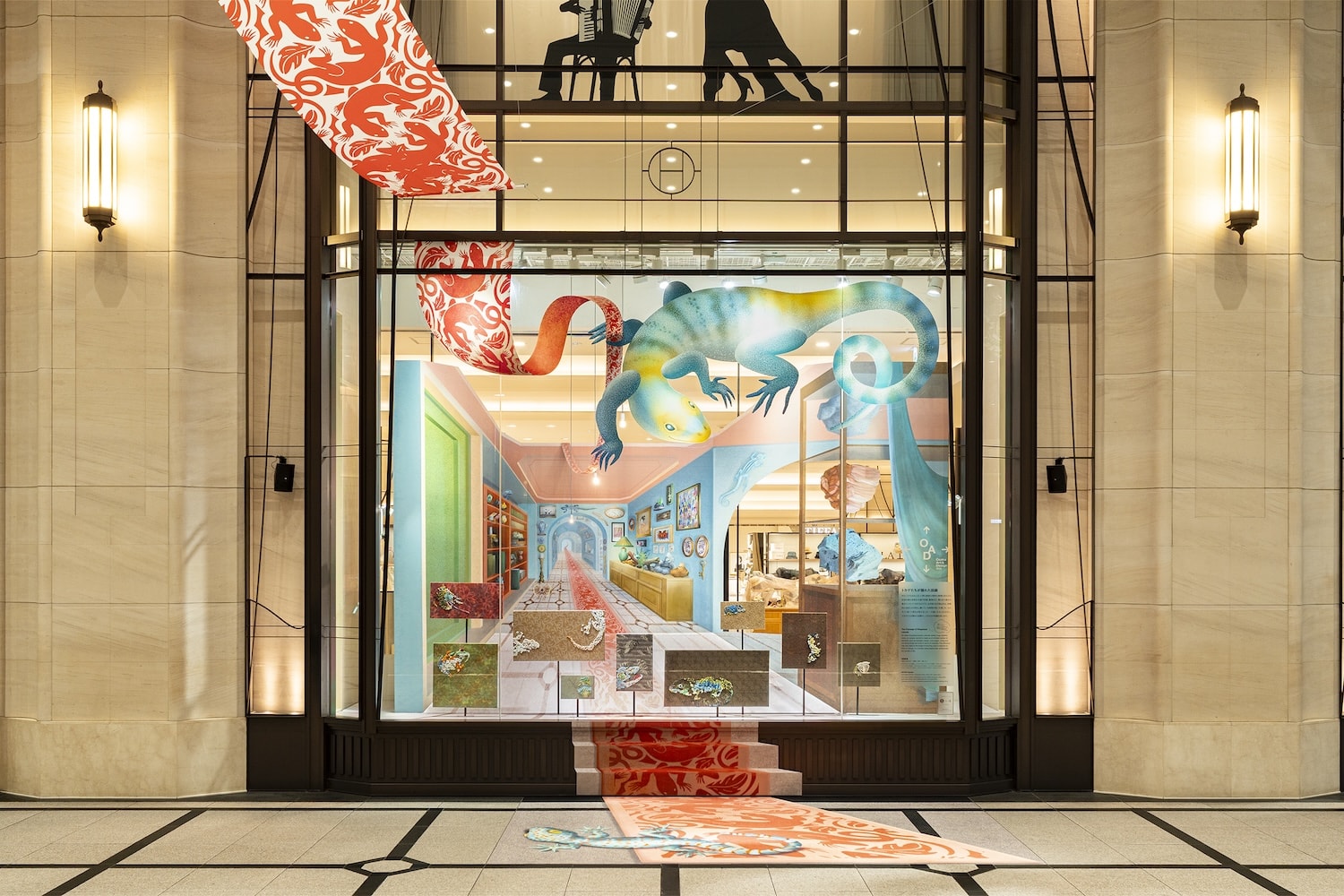
The Passage of Disguised Lizards
We—humans, animals, plants, fungi, mollusks, stones, oil, the sea, and the air alike—are all made up of the same limited number of elements, such as hydrogen, carbon, and oxygen. In terms of matter, living beings and non-living things are fundamentally similar. Perhaps the only difference lies in how long something moves or changes—whether for a brief moment, or over such an unfathomably long time that change becomes nearly invisible. In a corridor where lizards hide, we reflect on the mysteries of life.


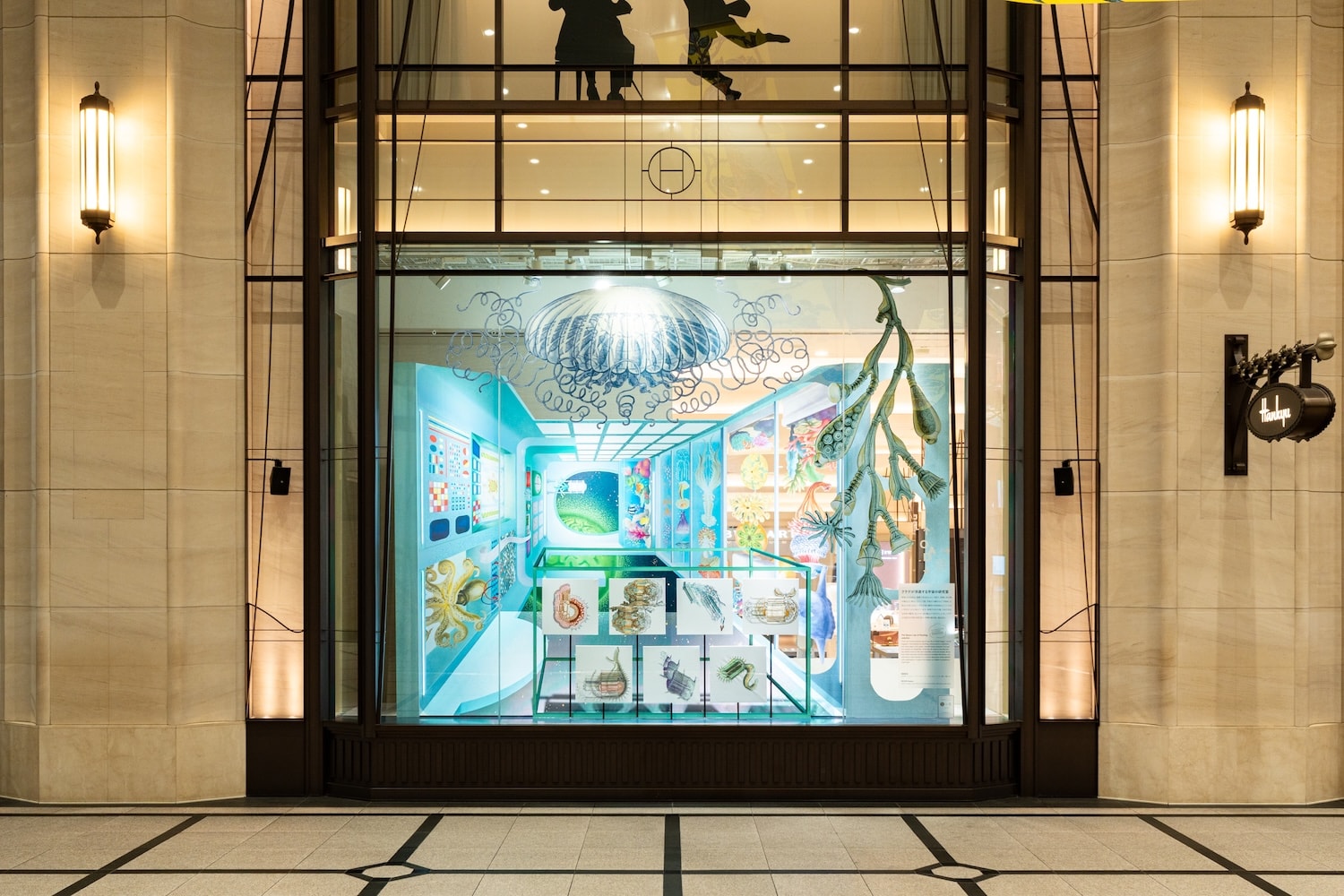
The Space Lab of Floating Jellyfish
There are several theories about how life on Earth began—some suggest it was sparked by lightning, others point to hydrothermal vents deep in the ocean, and still others propose it arrived from space via meteorites. What they all share is the idea that the earliest forms of life were incredibly small and simple. Since then, Earth has seen the flourishing of countless life forms—but what about other planets? In a cosmic laboratory where jellyfish drift weightlessly, we imagine the shapes our distant companions might take.


The Chatty Birds’ Conservatory
It has been discovered that several species of birds, much like humans, string together words to form sentences and communicate with their companions. Birds like parrots, which mimic human speech, were long believed to simply replicate sounds, but new research suggests they might actually be trying to say something with real intent. In a greenhouse of chatty birds, we reflect on this rich world, teeming with countless ciphers.